
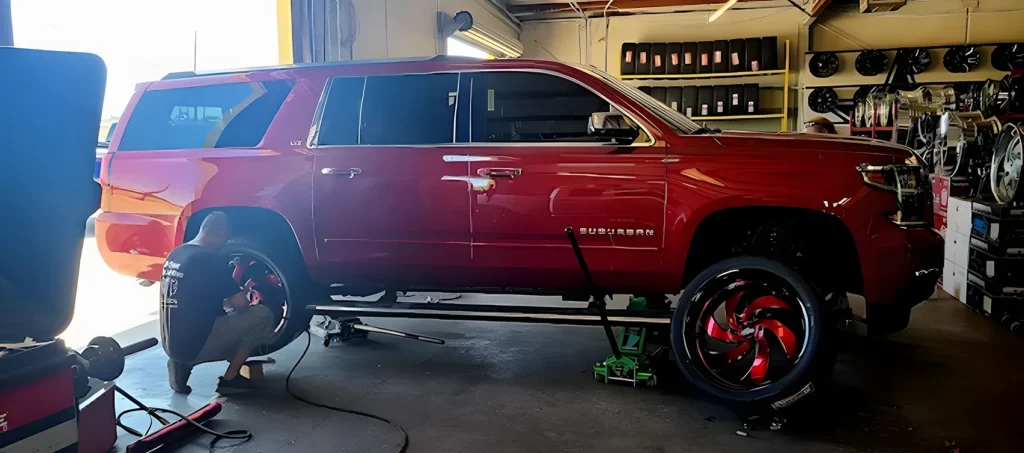
Your tires are one of the most important safety components of your vehicle. Over time, tires naturally wear down due to road friction, driving habits, and environmental conditions.
Knowing the common signs of tire wear can help you replace your tires before they become dangerous.
At D-Town Wheels & Tires, we help drivers identify worn tires and choose safe replacements.
Why Tire Wear Matters
Worn tires can significantly reduce your vehicle’s performance and safety.
Problems caused by worn tires include:
- longer stopping distance
- poor traction on wet roads
- increased risk of hydroplaning
- reduced steering control
Regular tire inspections can prevent these issues and keep your vehicle running safely.
Low Tread Depth
Tread depth is the most obvious sign of tire wear.
New tires usually start with around 10/32 inches of tread depth, while the legal limit in most states is 2/32 inches.
You can check tread depth using the penny test:
- Insert a penny into the tread with Lincoln’s head facing down.
- If you can see the top of Lincoln’s head, your tread is too worn.
If your tires fail this test, it’s time to replace them.
Uneven Tire Wear
Uneven tire wear can indicate other vehicle problems.
Common causes include:
- poor wheel alignment
- improper tire pressure
- suspension issues
- lack of tire rotation
Types of uneven wear include:
Edge wear – caused by underinflation
Center wear – caused by overinflation
Cupping – often caused by suspension issues
A professional tire inspection can help identify the cause.
Cracks or Dry Rot
Tires naturally age over time.
Exposure to sunlight, heat, and weather can cause rubber to dry out and crack.
Signs of aging include:
- small cracks on the sidewall
- brittle rubber
- faded appearance
Even if tread depth looks good, aging tires may need replacement.
Bulges or Blisters
A bulge on the tire sidewall is a serious warning sign.
This usually means the internal structure of the tire has been damaged.
Driving on a tire with a bulge can lead to a sudden blowout.
If you notice a bulge, replace the tire immediately.
Excessive Vibration
If your steering wheel vibrates while driving, it could indicate:
- tire imbalance
- uneven tire wear
- internal tire damage
A tire inspection can determine the exact cause.
How to Extend the Life of Your Tires
Proper maintenance can significantly extend tire lifespan.
Best practices include:
- rotating tires every 5,000–7,000 miles
- maintaining proper tire pressure
- keeping wheels properly aligned
- balancing tires regularly
These steps help ensure even wear and better performance.
Final Thoughts
Recognizing the signs of tire wear can help you replace your tires before they become a safety hazard.
If you’re unsure about the condition of your tires, visit D-Town Wheels & Tires for a professional inspection and expert recommendations.